Home Renovation

Inside The Great British Bake Off Alum James Morton’s Sustainable Scottish Kitchen Extension

Inside The Great British Bake Off Alum James Morton’s Sustainable Scottish Kitchen Extension


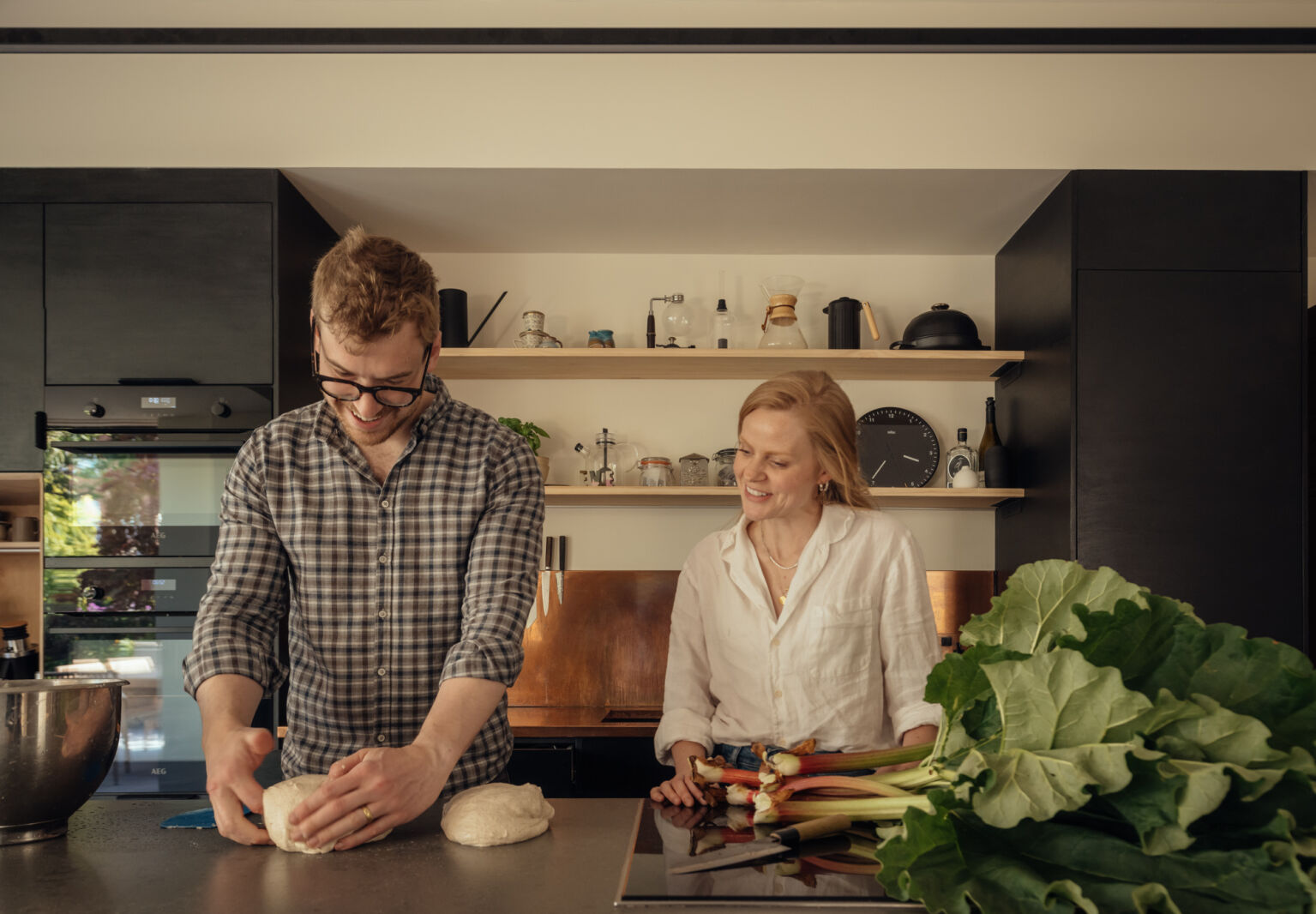
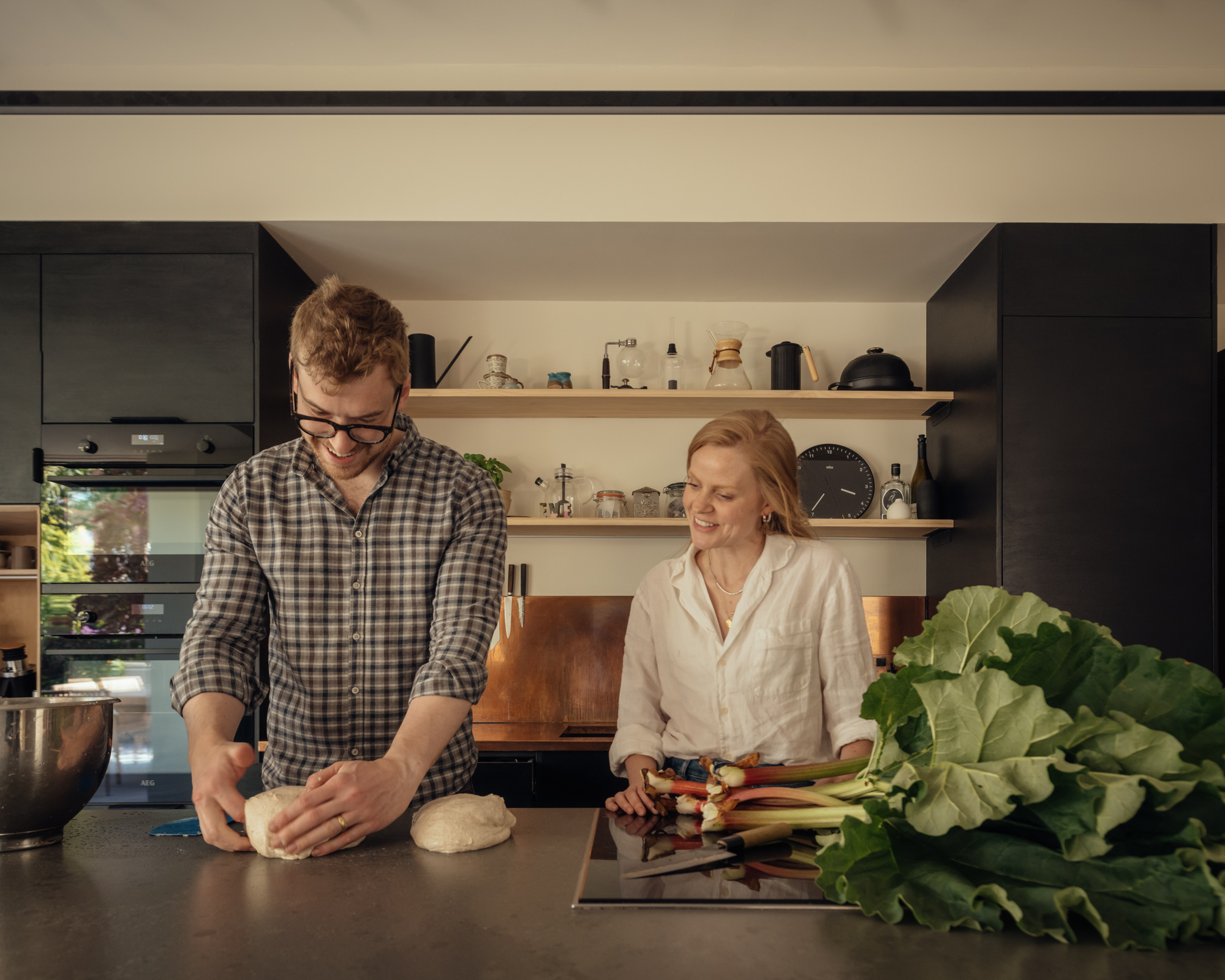
Most doctors don’t have time to make dinner, let alone compete on The Great British Bake Off and publish cookbooks, but James Morton somehow does it all.

On top of these dual careers, he and his wife Fenella Barlow-Pay (who’s also a doctor!) DIY-ed much of their historic Glasgow home renovation. The couple worked with sustainability-focused architecture firm Loader Monteith to take the Edwardian terrace house off gas, build an energy-efficient kitchen/dining/playroom extension, and secure the neighborhood’s first-ever approval for roof solar panels—but they tackled a lot of the labor themselves. “Doing much of the work ourselves was hard and at times difficult to manage with two full-time jobs and two small children, but it was also rewarding, and we’ve picked up lots of new skills along the way,” says Fenella.

Let’s take a look at this baker’s heart of the home: the kitchen.

Photography by Jim Stephenson.
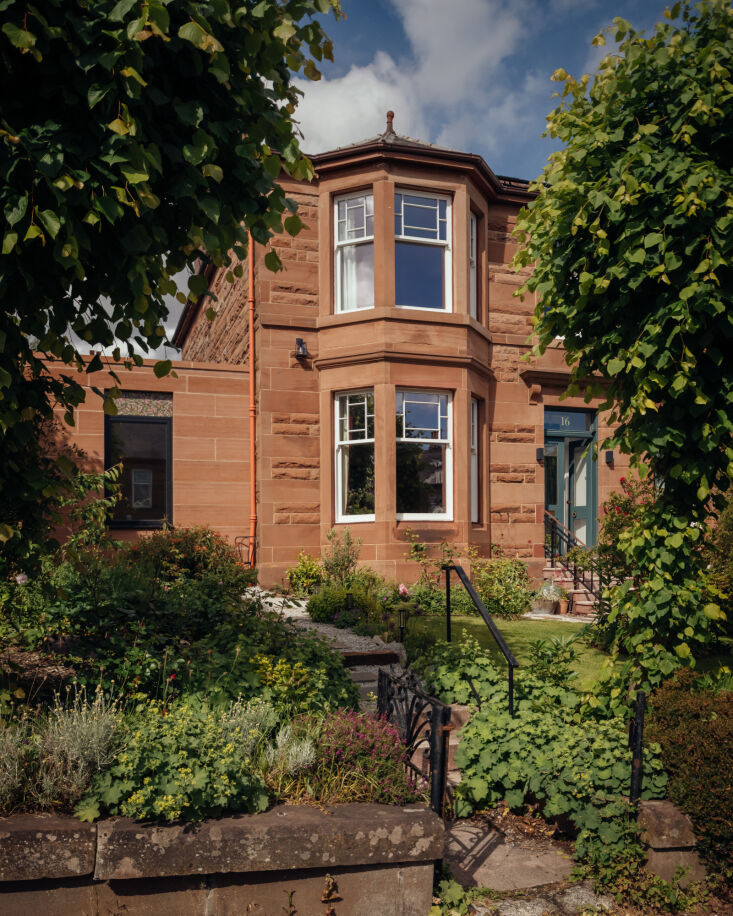
james and fenella wanted to prove that traditional terrace houses—which make  17
Above: James and Fenella wanted to prove that traditional terrace houses—which make up a quarter of the UK’s building stock—can be sustainable. Their late-19th-century home features a historic red sandstone facade like any other, but it functions like a thoroughly modern structure, with breathable wood fiber insulation they installed themselves. “We’re proud that we managed to achieve an EPC rating of A in a period home,” James says. “We really feel the benefits of the sustainability elements, as we are very cozy and warm—and our energy bills are low.”
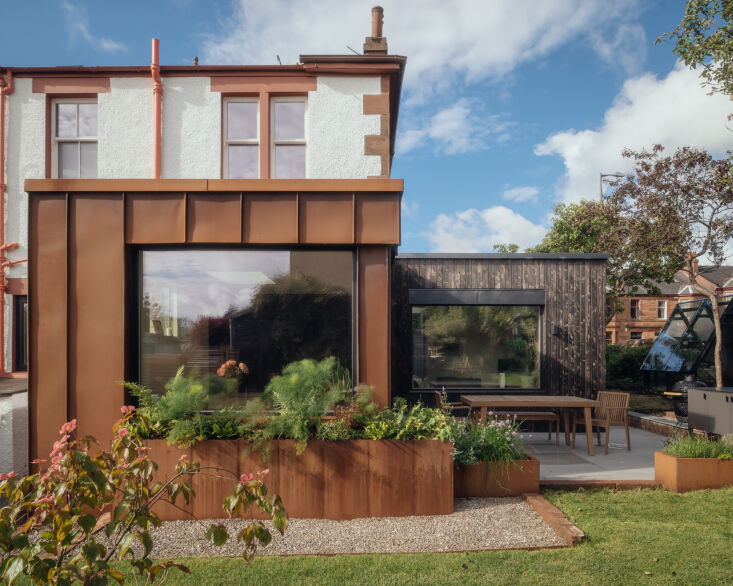
in the back, the couple asked loader monteith to design a two part corten steel 18
Above: In the back, the couple asked Loader Monteith to design a two-part corten steel and burnt larch extension that made use of the existing 1970s addition. “We love how the black of the larch brings out the warmth in the rusted steel,” says Fenella. “And charring the wood [which they did themselves!] gave us the aesthetic we wanted while protecting it without using paint or varnish.”


Source link